

Anne Hardy: Omens from the Past and Talismans for the Future
Curator and writer Emily Butler considers Anne Hardy’s exhibition Interloper, reflecting on materiality, transformation and the afterlives of objects.
1 of 8
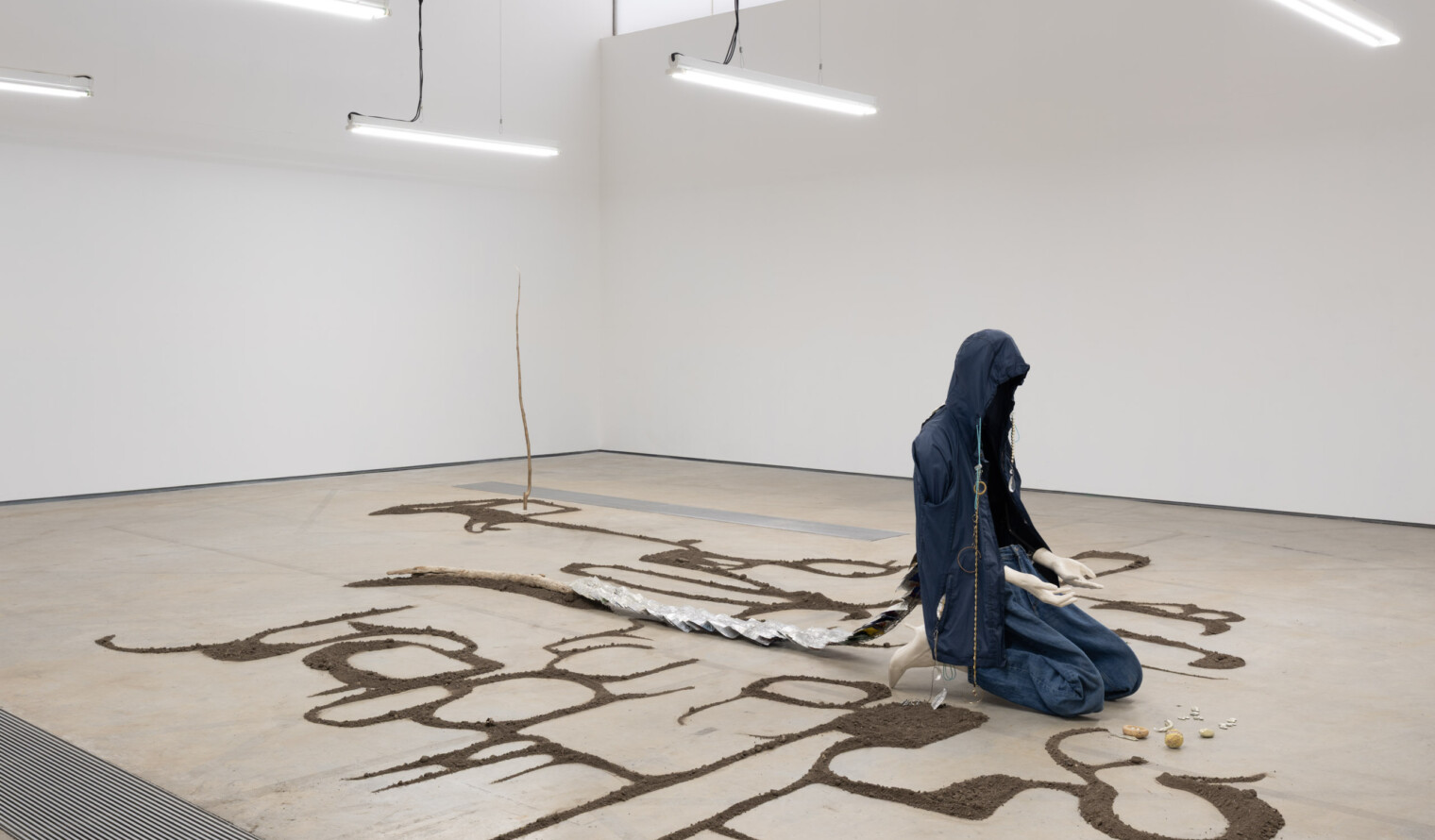
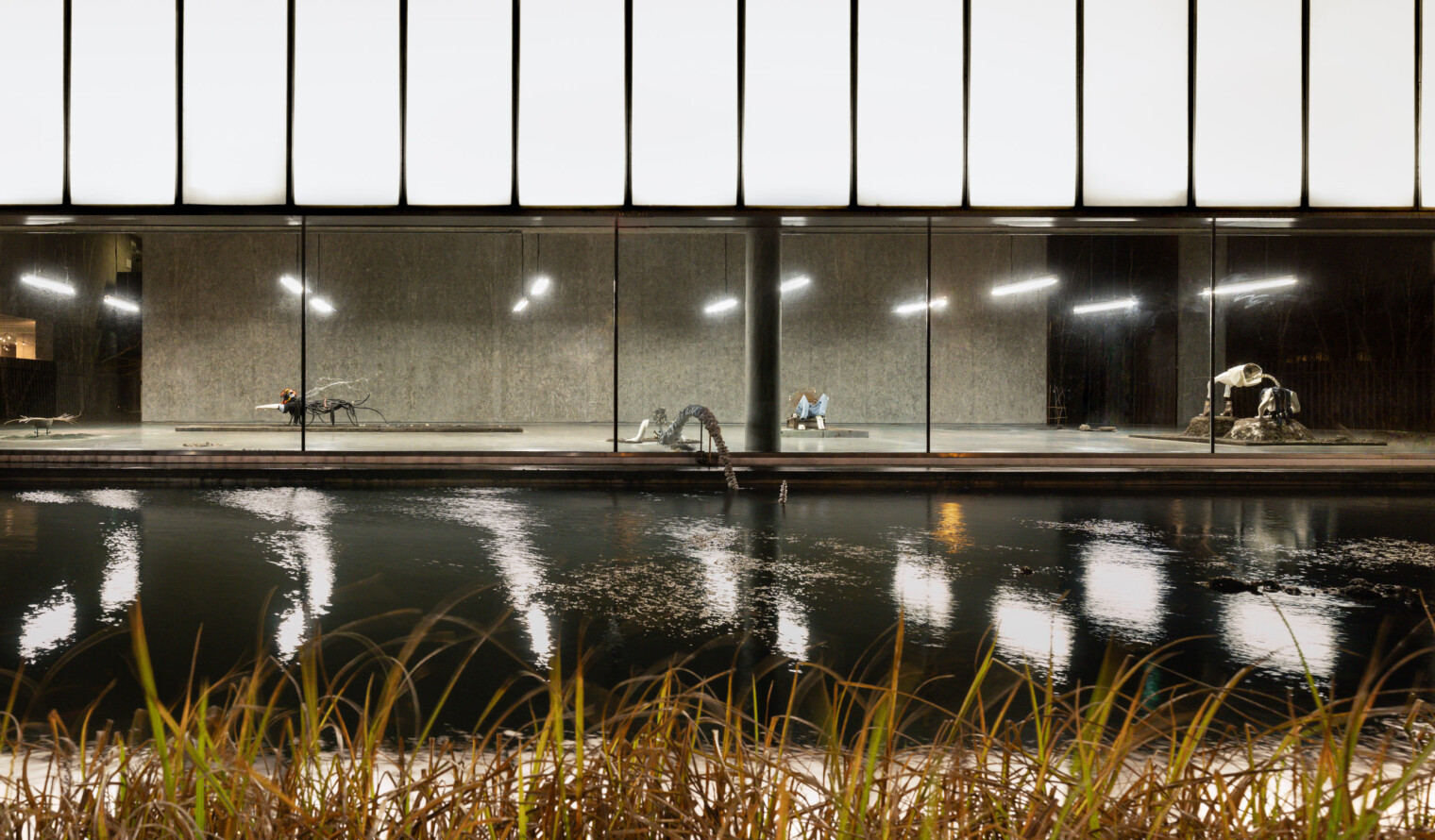
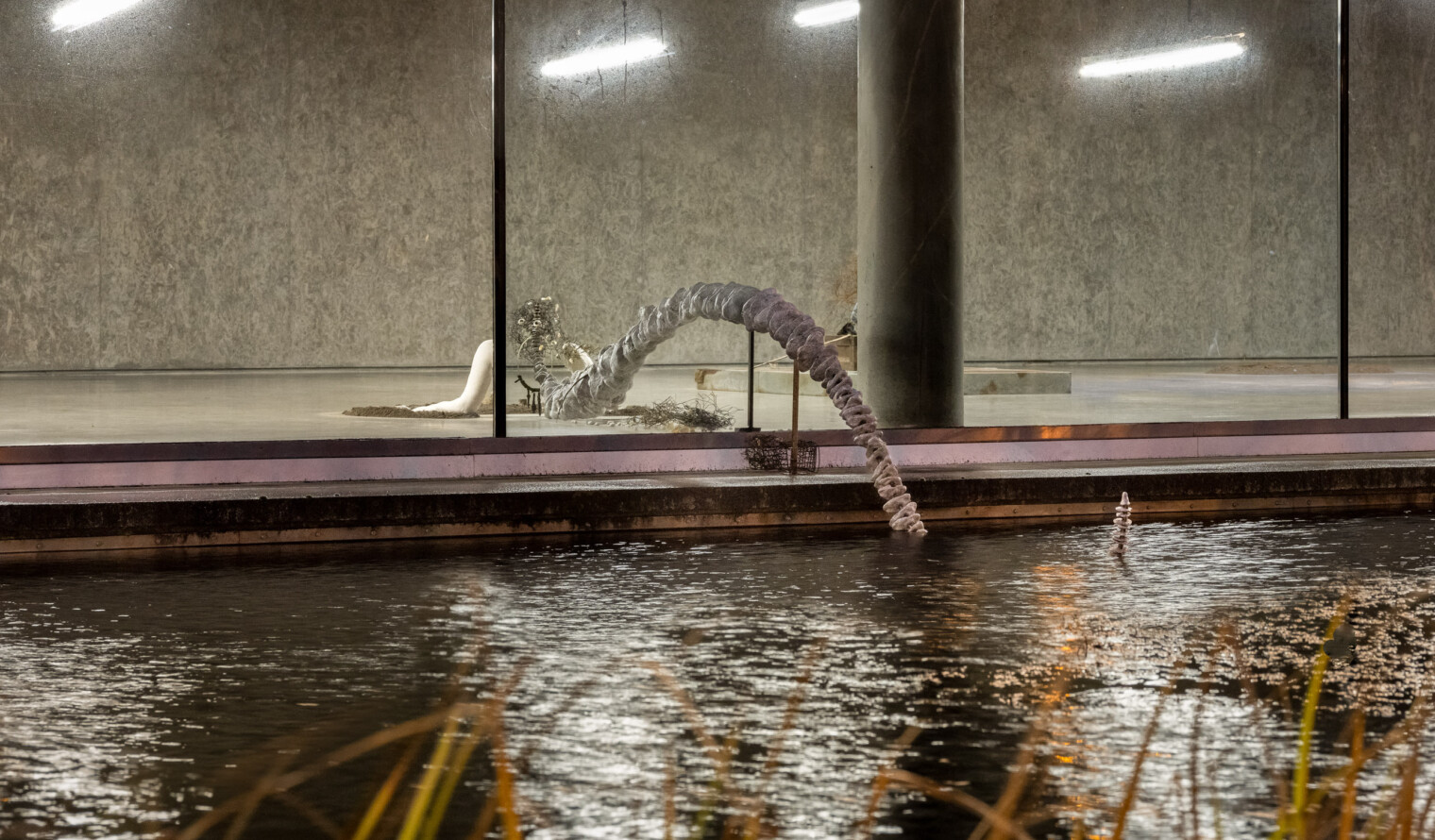
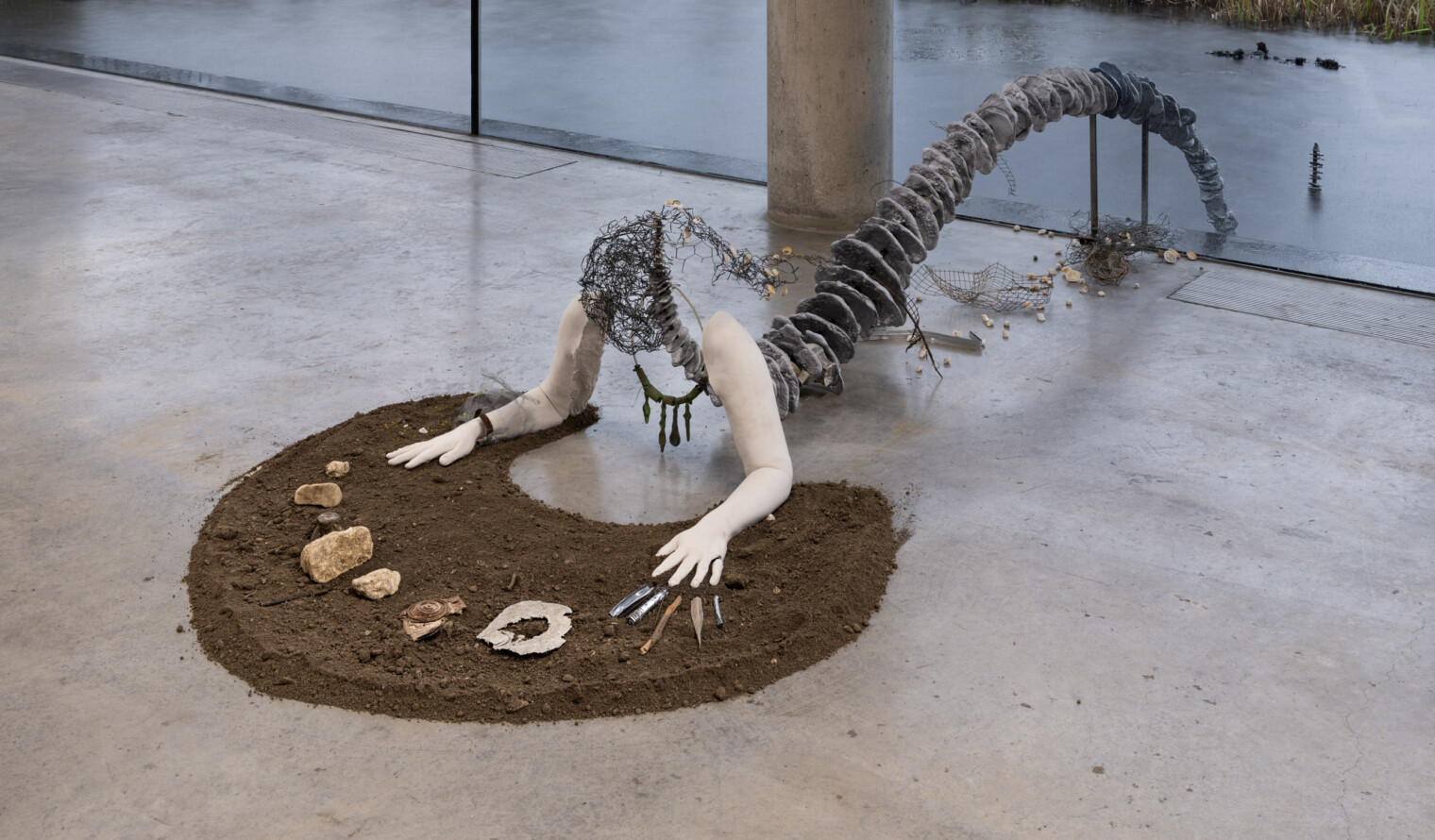
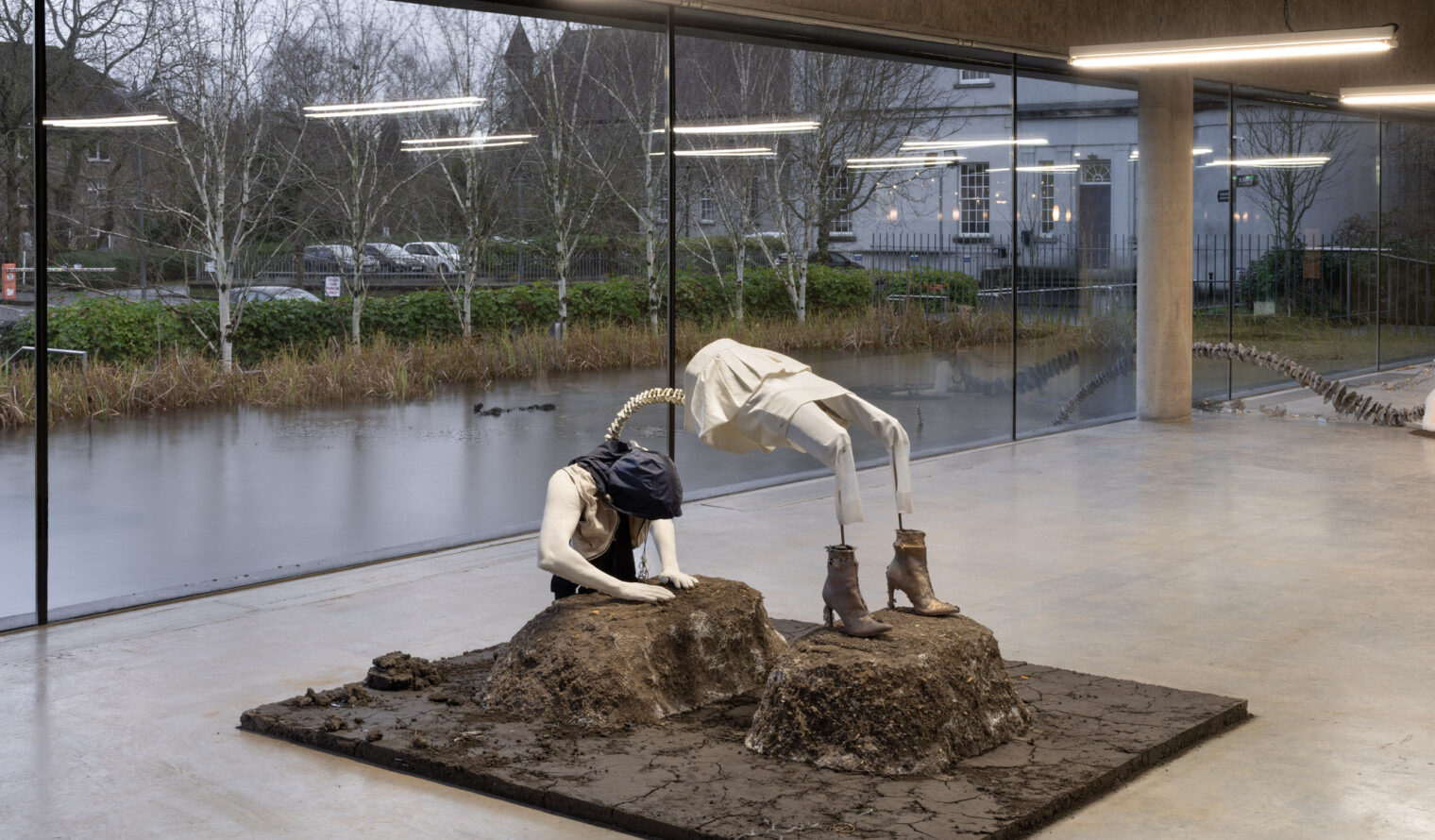
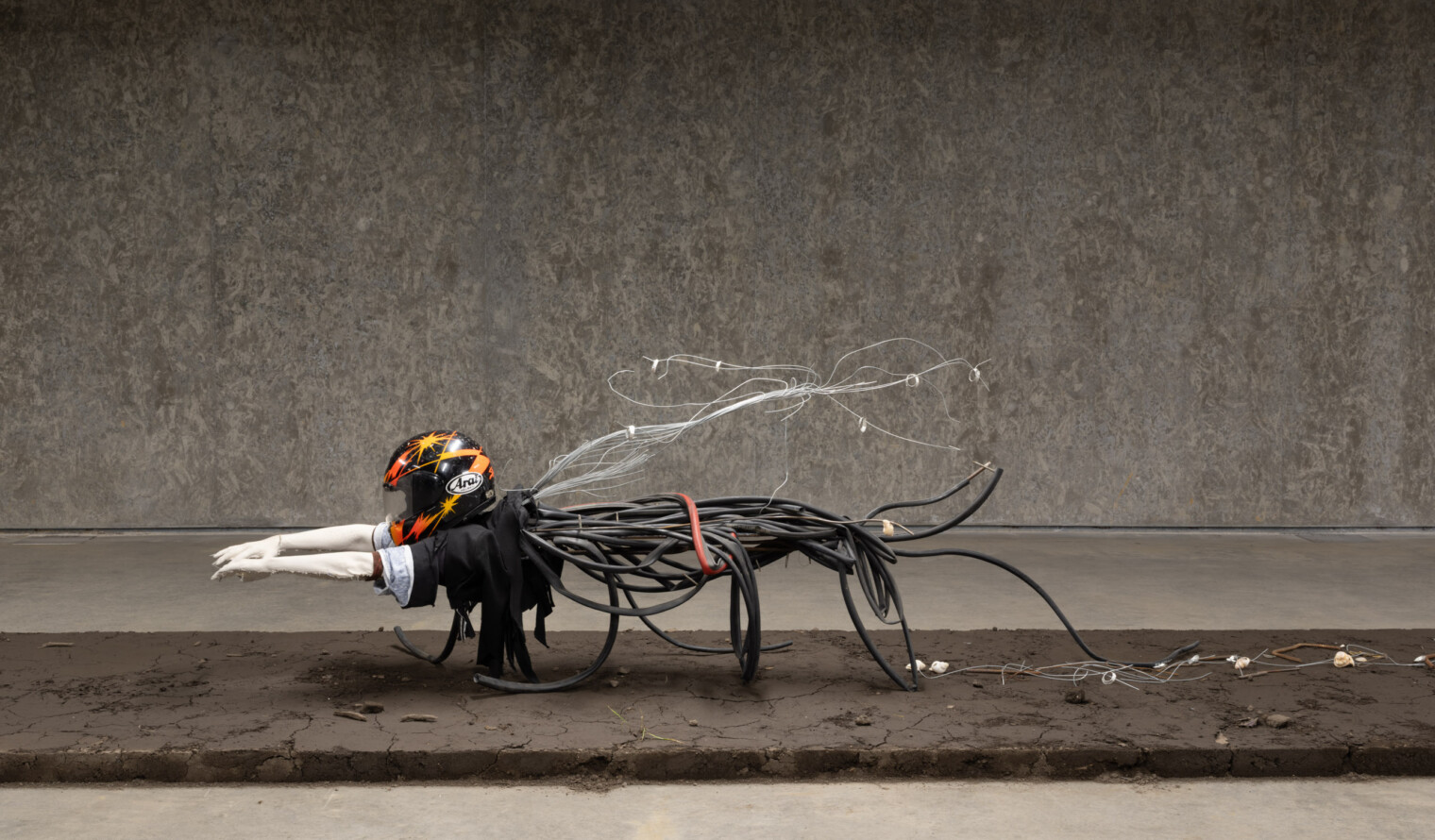
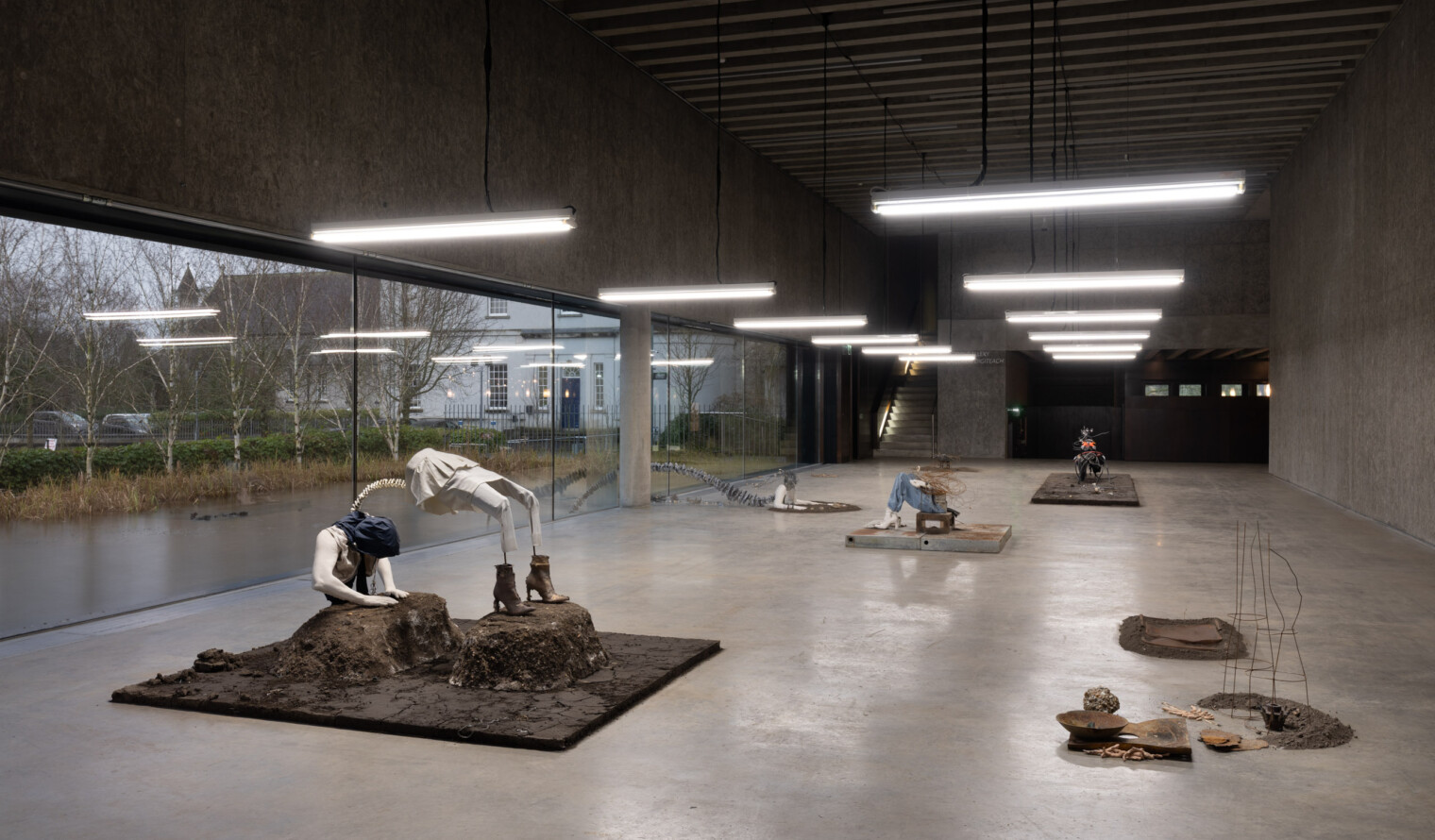
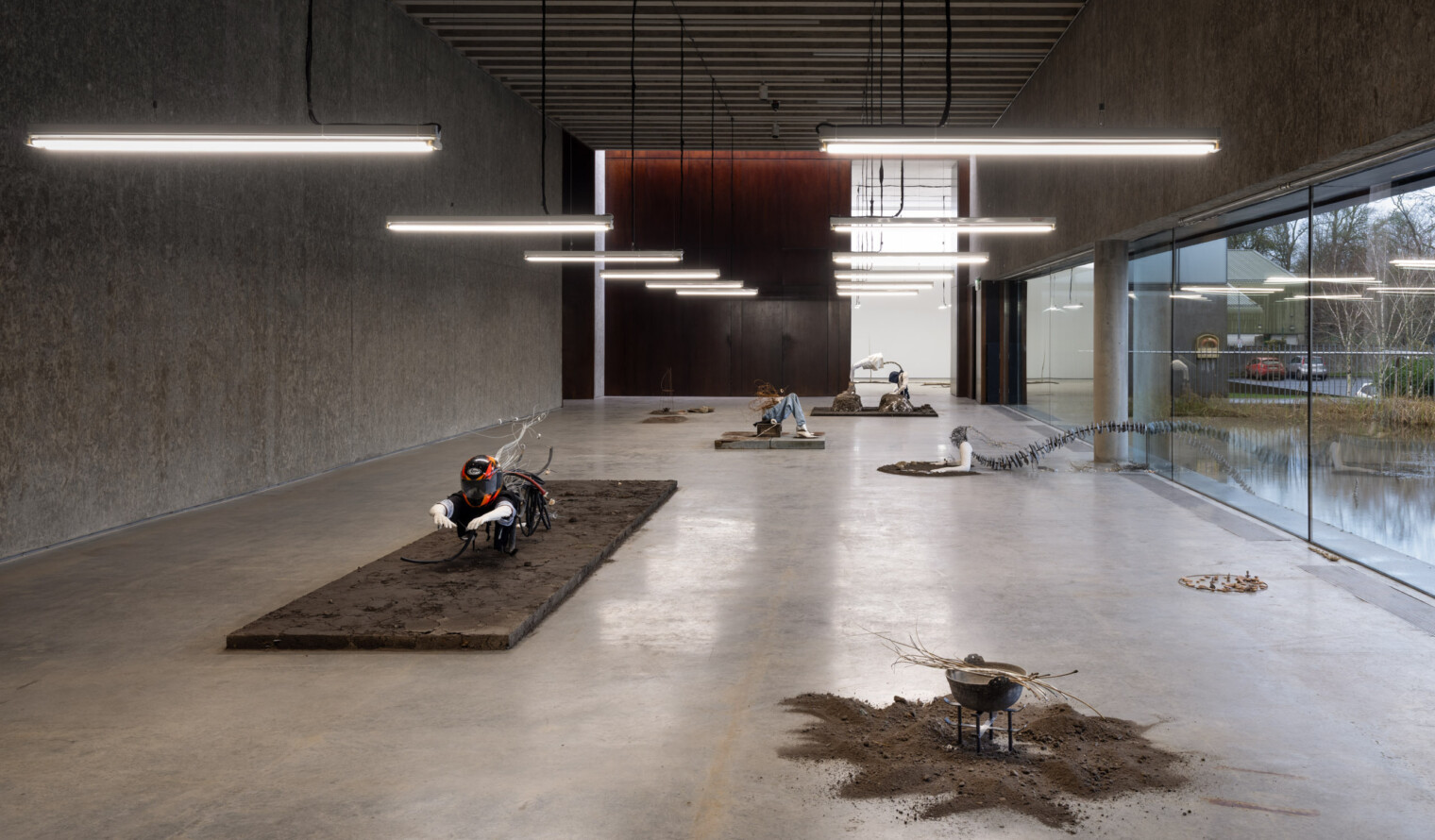
Anne Hardy, installation view, VISUAL, Carlow, Ireland, 2026 © Anne Hardy, courtesy Maureen Paley, London. Photography: Angus Mill
Anne Hardy: Omens from the Past and Talismans for the Future
By Emily Butler
As I view images of Anne Hardy’s exhibition Interloper on my laptop, Adobe’s automatic AI attempts to summarise the experience for me. It describes the main gallery space as: “A large room with a concrete floor and a dirt floor. There are several sculptures on the floor, including a motorcycle and a person.” Then, as if to compensate for its earlier misreading, it emphatically adds: “The room also has a window and a door.” Although it describes most of the works as sculptures, it interprets Being (Contortionist) (2025–26) as a “nude figure… posed on a rock”, specifying somewhat ambiguously that it is a “man and a woman”, before remarking once again that the floor is made of concrete, or dirt.
Reminiscent of both an archaeological dig and a future ruin, Hardy’s sculptural installations feel like scenes drawn from half-forgotten stories and half-predicted futures. The AI’s misreading underscores the works’ capacity to generate endless reinterpretations, suspending time, material reference and human use. The five figures that inhabit Hardy’s installations can be seen as interlopers, as the exhibition title suggests, emerging from or penetrating a room where they initially seem out of place, yet in which they have now established a symbiosis with VISUAL’S architecture and its spectacular windows and doors. Like contortionists, Hardy’s figures are poised in delicate balance, inhabiting different states, the fictional and the physical, precarity and strength, and we are invited to navigate the space in between.
Being (Slipstream) (2024–26), the striking poster figure for the exhibition, floats above the compacted dirt floor. She evokes Hardy’s experiences in Marfa: of expansive landscapes, the ubiquity of dry soil, the paraphernalia needed to survive at the edge of the urban grid, the resilience of its inhabitants and, ultimately, the fragilities of human infrastructure. While Hardy leaves space for our imagination to engage with the figure, her choice of materials and their descriptions are both precise and poetic: “artist’s clothes, welded steel, cast pewter, inner tubes, tyres, motorbike helmet, casts of the artist’s arms, shells, rusted steel, found materials, cracked earth.” The work’s links to transience, travel and the need for protection are clear, yet how these objects relate to one another, and to us, remains open. The figure glides through the air as if suspended in motion, her rubber entrails and a slipstream of wires trailing behind her, scattering objects in her wake. These small items – rusted rebar, nails, hooks, carefully cast pewter tubes and shells – hover somewhere between discards and offerings.
In her work, Hardy reconsiders our leftovers: material, economic, historic, emotional, even linguistic. A serial scavenger, she collects detritus – earrings, drink can pull-tabs, shells, plants – the readymades of the street, seeking to reinvest them with significance, beyond their limited economic lifespan. She is interested in what Jane Bennett calls, in Vibrant Matter (2010), “the vitality of matter and the lively powers of material transformation.” Being (Chimera) (2026) embodies these processes of transformation and re-evaluation, bringing together an array of found and cast materials to form a hybrid figure, an apparition emerging from the pond through the scenic picture windows. In Greek mythology, the Chimera was a powerful shapeshifting, fire-breathing female creature composed of incongruous elements: a lion's head, a goat's body, and a serpent's tail. As a symbol of disruptive female power, the Chimera embodies both aspiration and instability, a state of transformative becoming.
By revisiting these leftovers, Hardy translates them through her experience into the present. She builds her own vocabulary of form: symbols shaped in earth, arrangements of stones, scraps of metal, and pewter objects. She is drawn to this malleable metal alloy – historically used for decorative wares – to cast found materials. Her visual grammar balances fragility and solidity, speaking to transience, change and decay. Her work resonates with installation and land artists from the 1970s, such as Robert Smithson and Nancy Holt, who explored the pull of entropy and the artistic possibilities of negentropy – the temporary reinscription of the environment, and our perception of it, with new meaning. In ‘The Monuments of Passaic’ (1967), Smithson wrote that: “The future is lost somewhere in the dumps of the non-historical past.” Hardy takes up this challenge, choosing what to recirculate and translate into her visual language from states of decline, erosion and presumed obsolescence.
Recirculation is also a form of emotional reinvestment. Situated in its own sanctuary-like space, Being (Interloper) (2022–24) seems to be in a state of aesthetic or spiritual contemplation. Kneeling and shrouded in a blue jacket, with a long spine of crushed cans extending behind it, the figure seems engaged in an offering. The hollow figure may be Hardy herself – after all, these are her old clothes and heels – following her residency at the Chinati Foundation in Marfa. She arrived with only a handful of pewter beans and left with a heightened awareness of the relationship between human experience, the elements, materials, and forms of sustenance outside of urban contexts. To extend this altered state, she brings Marfa’s weather to Carlow through a custom lighting system, whose gentle flickering transmits its fluctuating patterns. In this way, Being (Interloper) embodies an offering, to the land, to the weather, to the community, and invites us to feel changed as well.
Hardy’s installations grapple with surplus and leftovers, which she reclaims and translates into new configurations, opening space for new readings and emotional responses. Here, we can build our own narratives, perform acts of imagination or even incantations. Hardy’s figures are not nude but bare: they are fragmented, hollow, nomadic; assemblages of materiality in the process of becoming, leaving room for us to inhabit and invest them with significance and hope. Rosi Braidotti describes the posthuman (2013) as “a relational subject constituted in and by multiplicity”, one that is entangled with the more-than-human world. As we move through this space of memories, futurities and entanglements, Hardy flips the question of who the interloper is. To accompany us on our journey, she offers omens from the past and talismans for the future.
Emily Butler is a freelance curator, researcher and writer based in London.
Anne Hardy, Interloper continues at VISUAL Carlow until 10 May